Automação & Robótica
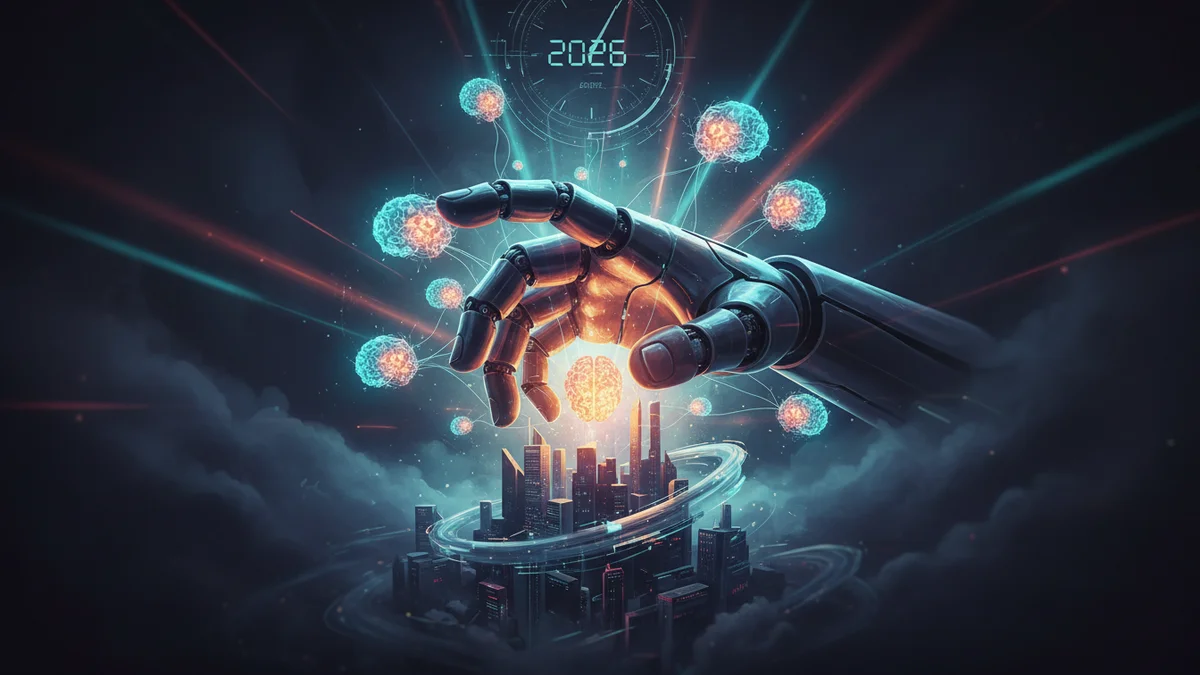
AI Automation: Transforming Industries and the Workforce by 2026
Dr. Adrian Vale
LLM, AI Agents & AI Infrastructure Specialist
6 min read
Listen to Article
AI automated narration
LLM, AI Agents & AI Infrastructure Specialist
AI automation is set to redefine job roles and industries by 2026. Understanding its impacts is crucial for staying competitive and seizing new opportunities in the evolving workforce.
AI automation is revolutionizing how industries operate, leveraging advanced algorithms to perform tasks traditionally carried out by humans. Its rapid evolution is reshaping businesses, creating both opportunities and challenges for professionals worldwide. As we look toward 2026, understanding the implications of AI automation is crucial for staying competitive in an increasingly digital economy.
AI automation has permeated virtually every industry, delivering measurable benefits through efficiency, cost reduction, and enhanced decision-making. Key sectors leading the adoption of AI automation include:
In manufacturing, AI automation has become synonymous with efficiency. Robots and automated systems are now pivotal in assembly lines, ensuring precision and consistency. Predictive maintenance powered by AI minimizes downtime, as sensors and machine learning algorithms detect potential failures before they occur. Companies like Tesla and Siemens are at the forefront of integrating AI into their production processes, setting new standards for smart manufacturing.
In the healthcare sector, AI automation is transforming patient care and operational workflows. AI-driven diagnostic tools analyze medical imaging with high accuracy, aiding doctors in early disease detection. Electronic health record (EHR) management systems powered by AI streamline data organization, enabling faster decision-making. Notably, platforms such as IBM Watson Health are making strides in personalized medicine by leveraging AI to tailor treatments based on individual patient data.
The financial industry has embraced AI automation to enhance security, reduce fraud, and optimize operations. AI-powered algorithms process vast datasets in real-time to detect fraudulent transactions, while robo-advisors provide personalized investment advice to clients. Banks like JPMorgan Chase and fintech companies such as Stripe exemplify how AI automation drives innovation in financial services.
Beyond industry-specific applications, AI automation is making a tangible impact through widely adopted tools:
For instance, e-commerce giants like Amazon utilize AI to anticipate customer demand, ensuring seamless supply chain operations.
Brazil has emerged as a hub for AI innovation, with companies like Magazine Luiza and Nubank leading the charge. Magazine Luiza harnesses AI automation to enhance the customer shopping experience, offering personalized recommendations and streamlining logistics. Meanwhile, Nubank, a digital banking pioneer, uses AI to improve fraud detection and deliver exceptional customer service. These examples highlight how AI automation is driving growth and competitiveness in emerging markets.
AI automation is not just changing industries—it is fundamentally altering the workforce. As repetitive tasks are automated, the demand for digital and analytical skills is on the rise. This shift presents both challenges and opportunities for workers.
On the flip side, AI automation is creating entirely new job categories, particularly in highly specialized fields:
To thrive in this evolving landscape, workers must embrace continuous learning. Online courses, certifications, and workshops focused on AI and machine learning can provide the skills necessary to stay relevant. Companies, too, must invest in employee training programs to upskill their workforce and ensure a smooth transition into AI-driven workflows.
The next few years promise significant advancements in AI automation, with far-reaching implications for businesses and society as a whole. By 2026, we can expect:
AI will become deeply embedded in business operations, from supply chain management to customer engagement. Automation platforms will be seamlessly integrated, enabling organizations to operate with unprecedented efficiency.
As AI systems become more sophisticated, so will their ability to detect and prevent cyber threats. Blockchain technology combined with AI is likely to bolster data security, ensuring the integrity of automated processes.
Startups and small businesses will gain access to affordable AI solutions, leveling the playing field with larger enterprises. This democratization of technology will spur innovation and competition across industries.
Startups are playing a pivotal role in driving AI innovation, often pioneering niche automation solutions that address specific market needs. Meanwhile, established enterprises are focusing on scaling AI initiatives to maintain their competitive edge. This dynamic ecosystem fosters collaboration and accelerates technological progress, benefiting all stakeholders.
AI automation is not just a technological trend—it is a transformative force reshaping industries, economies, and the job market. By 2026, its impact will be felt across every sector, with businesses achieving new levels of efficiency and innovation. However, this progress comes with challenges, particularly for the workforce. Job displacement is inevitable, but so is the creation of new opportunities in AI development, data management, and analytics.
For professionals, the key to thriving in this new era lies in adaptability and continuous learning. Investing in skills related to AI and automation will be essential to remain competitive. Similarly, businesses must prioritize upskilling their workforce to navigate this transition successfully.
As we move toward a future defined by AI automation, one thing is clear: those who embrace change and prepare for the challenges ahead will be best positioned to reap the rewards of this transformative technology.
AI automation involves using advanced algorithms to perform tasks automatically, reducing the need for human intervention while improving efficiency and accuracy.
AI automation enhances productivity, reduces operational costs, improves decision-making, and enables personalized customer experiences.
While certain jobs may become obsolete, new roles in AI development, data analysis, and business strategy are emerging, offering significant opportunities for growth.
💡 Dica Pro: Explore industry-specific AI tools and platforms to enhance your expertise. Specialized knowledge can set you apart in a competitive job market.