Ética & Regulação
OpenAI’s AI Interns: Pioneering the Future of Scientific Research by 2026
Dr. Adrian Vale
LLM, AI Agents & AI Infrastructure Specialist
6 min read
Listen to Article
AI automated narration
LLM, AI Agents & AI Infrastructure Specialist
Discover how OpenAI's AI research interns aim to transform scientific breakthroughs starting in 2026. Learn about their potential and challenges.
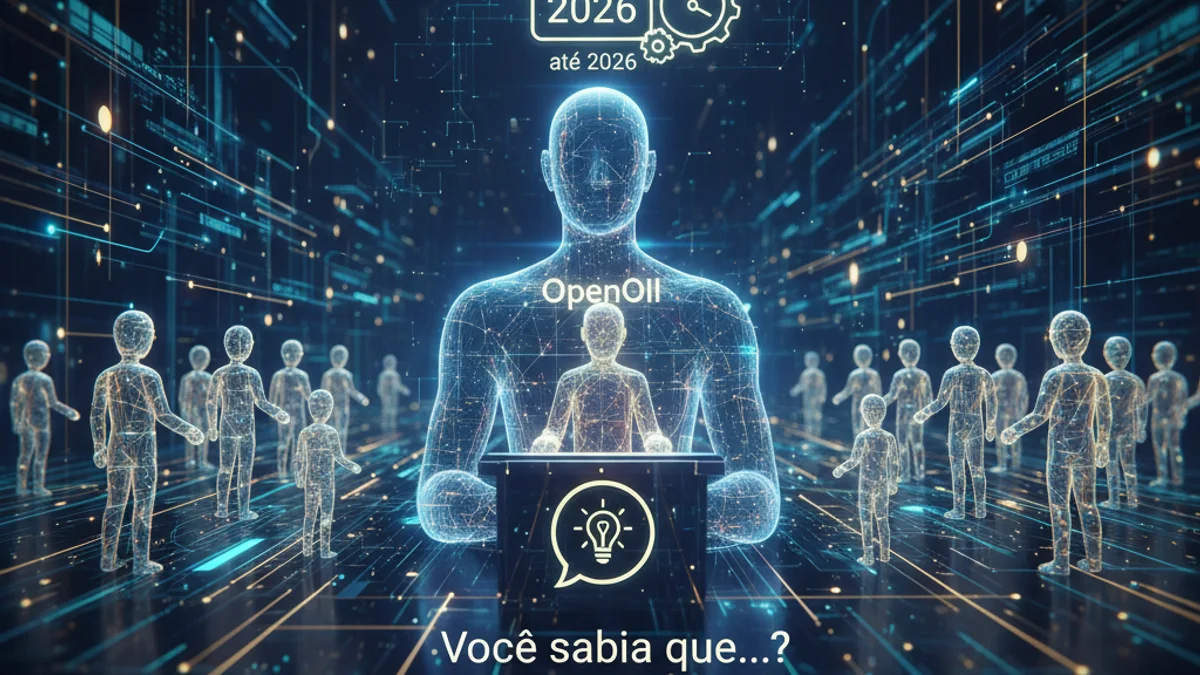
OpenAI, a frontrunner in artificial intelligence innovation, has announced an ambitious initiative to launch AI research interns by January 2026. This groundbreaking program is designed to integrate AI into the heart of scientific research, offering a new paradigm for how discoveries are made and knowledge is generated. These AI research interns will serve as digital collaborators, aiding human researchers in disciplines ranging from healthcare and environmental science to physics and technology development.
The role of artificial intelligence in science has grown exponentially over the past decade. From aiding in the discovery of new drugs to optimizing supply chains, AI has demonstrated its potential to enhance efficiency and reduce human error. OpenAI’s initiative seeks to build on these successes by introducing AI systems that can autonomously generate hypotheses, analyze complex datasets, and even draw preliminary conclusions. In doing so, OpenAI aims to accelerate the pace of scientific discovery while addressing critical challenges in fields like medicine, climate change, and technological innovation.
OpenAI’s roadmap outlines a clear and transformative vision for the future of artificial intelligence in research. The rollout of AI research interns in 2026 is just the beginning. By 2028, OpenAI aims to evolve these systems into fully autonomous AI researchers capable of conducting end-to-end investigations with minimal human input. This milestone is a significant step toward achieving Artificial General Intelligence (AGI)—AI systems with human-like reasoning and cognitive abilities.
The timeline is as follows:
This roadmap underscores OpenAI’s commitment to pushing the boundaries of what AI can achieve, while also addressing the ethical and practical challenges that such advancements will bring. For instance, the transition from AI assistants to autonomous researchers raises critical questions about accountability, intellectual property, and the role of human oversight in scientific endeavors.
A key figure in this initiative is Noam Brown, a leading research scientist at OpenAI known for his groundbreaking work in AI development. Brown has been instrumental in creating models that outperform human experts in complex games like poker, showcasing the potential of AI to handle intricate decision-making processes. His expertise is now being channeled into the development of AI systems that can revolutionize scientific research.
According to Brown, the primary goal of AI research interns is to serve as tools for scientific advancement. "AI should be a partner, not a replacement," he stated in a recent interview. "The idea is to augment human capabilities by automating repetitive tasks and providing insights that might otherwise go unnoticed." For example, AI interns could analyze vast datasets to identify patterns or anomalies, freeing up human researchers to focus on strategic and creative aspects of their work.
Brown and his team are also addressing the ethical implications of deploying AI in research. Ensuring transparency, preventing bias, and maintaining human oversight are all critical components of their strategy. These considerations will be crucial as OpenAI moves toward the development of autonomous AI researchers.
The introduction of AI research interns promises to transform the scientific landscape in profound ways. Below are some of the key benefits and challenges associated with this initiative:
The ethical challenges posed by AI research interns cannot be overstated. Transparency will be key to ensuring that these systems are used responsibly. OpenAI has already committed to incorporating explainability into its AI models, allowing researchers to understand how decisions are made and conclusions are reached. Additionally, human oversight will remain a cornerstone of the program, particularly during its initial phases.
Collaboration with policymakers, academics, and industry leaders will also be crucial. By fostering an open dialogue, OpenAI hopes to address concerns and build trust within the scientific community. This collaborative approach will help ensure that the benefits of AI research interns are realized without compromising ethical standards.
The launch of AI research interns by OpenAI marks a pivotal moment in the evolution of scientific research. By 2026, these AI systems will begin to reshape how discoveries are made, offering unprecedented speed, efficiency, and insight. As the technology matures, the potential for fully autonomous AI researchers by 2028 represents a bold leap toward a future where machines and humans work hand in hand to solve some of the world’s most pressing challenges.
However, this transformation will not come without its hurdles. Ethical considerations, such as transparency, accountability, and the potential for misuse, must be addressed proactively. The scientific community, alongside policymakers and technology developers, must work together to establish guidelines and regulations that ensure the responsible use of AI in research.
In the coming years, the integration of AI interns into scientific workflows will likely spark a new era of innovation, enabling breakthroughs that were previously unimaginable. While the road ahead is fraught with challenges, the potential rewards make this a journey worth undertaking. OpenAI’s vision for AI research interns is not just about advancing technology—it’s about redefining the very nature of discovery and human progress.
💡 Pro Tip: Stay ahead of the curve by exploring how AI tools can complement your industry. Whether you’re in academia, business, or healthcare, the possibilities are endless!