IA Generativa
Can AI Really Replace Your Professional Headshot? A Deep Dive into the Future of Portrait Photography
Dr. Adrian Vale
LLM, AI Agents & AI Infrastructure Specialist
LLM, AI Agents & AI Infrastructure Specialist
While AI-generated images are on the rise, they can't match the authenticity and human connection offered by professional headshot photography. Discover the critical limitations of AI in this space and why hiring a professional is essential.
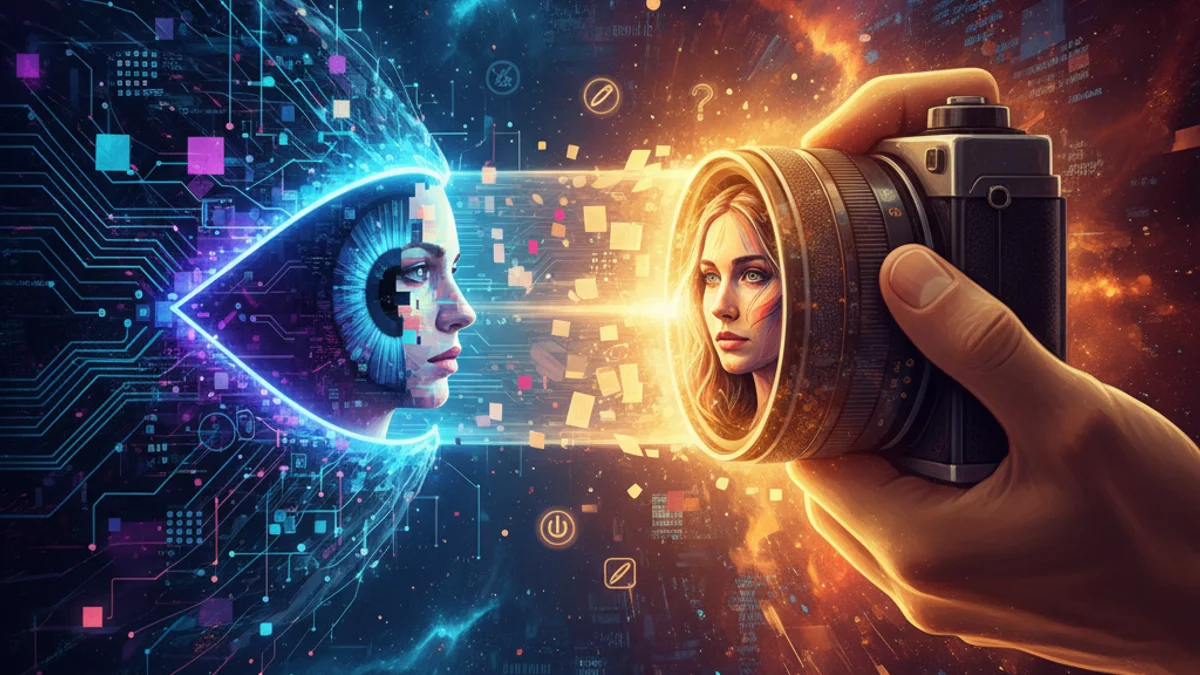
In recent years, artificial intelligence (AI) has made significant strides across various industries, and photography is no exception. From automated editing tools to sophisticated image generation, AI has sparked debates about its potential to replace professional photographers, particularly in the realm of headshot photography. While the technology offers convenience and cost-effectiveness, it raises an important question: can AI truly replicate the artistry, authenticity, and human connection that professional headshot photography delivers?
In this article, we’ll explore how AI-generated portraits work, their limitations, the enduring value of professional photography, and what the future holds for this fascinating intersection of technology and creativity.
AI-generated portraits are digital images created by advanced algorithms designed to mimic human likeness. These systems, often powered by Generative Adversarial Networks (GANs), analyze massive datasets of facial images to synthesize highly realistic portraits. GANs operate by pitting two neural networks against each other: one generates images, while the other evaluates their quality. Through this iterative process, the AI becomes adept at producing lifelike faces that can even include subtle features like skin texture, lighting effects, and shadowing.
While these applications show promise, they often fall short when it comes to creating the nuanced, personalized images that people expect from professional headshots.
Despite their technological brilliance, AI-generated portraits face several significant challenges. These limitations highlight the gap between AI's capabilities and the artistry of professional photographers.
AI can generate convincing facial features, but it struggles to capture the emotional depth and personal essence that make a headshot truly unique. A professional photographer engages with their subject, bringing out subtle expressions and emotions that convey personality, which AI lacks the capacity to interpret or replicate.
While AI excels at simulating ideal conditions, it often falters when faced with complex lighting scenarios. Professional photographers, on the other hand, are skilled at adapting to various lighting conditions—whether natural light, studio setups, or outdoor environments—and use their expertise to enhance the subject’s features.
Photography is as much about the technical aspects as it is about the relationship between the photographer and the subject. A skilled photographer uses their intuition, experience, and artistic vision to create an image that tells a story or conveys a mood. AI operates purely on data, lacking the creativity and emotional intelligence to establish this connection.
AI-generated portraits also raise ethical questions. For instance, without proper regulation, these images could be misused for creating fake identities or deepfakes, undermining trust in visual content.
While AI technology continues to evolve, the advantages of professional photography remain unmatched, particularly for headshots. Here’s why:
Professional photographers are skilled at making their clients feel comfortable and confident in front of the camera. This human interaction plays a vital role in capturing authentic expressions and emotions—something AI simply cannot replicate.
A professional photographer works closely with clients to tailor the session to their needs. They consider factors like wardrobe, posture, and even the intended use of the headshot, ensuring the final image reflects the subject’s unique personality and brand.
Unlike AI, which relies on pre-existing data, photographers can adapt to diverse and dynamic environments. Whether adjusting to unpredictable weather during outdoor shoots or improvising with limited resources, their expertise ensures high-quality results in any situation.
Even as AI-assisted editing tools become more advanced, professional photographers still excel in creative post-processing. They use tools like Adobe Photoshop and Lightroom to enhance images with a level of precision and artistry that AI alone cannot achieve.
Rather than replacing professional photographers, AI is likely to play a complementary role in the future of photography. By integrating AI tools into their workflows, photographers can enhance their efficiency and creativity while maintaining the human touch that defines their craft.
AI can streamline repetitive tasks, such as editing, color correction, and background removal, freeing photographers to focus on the creative aspects of their work. For example, tools like Luminar AI and Adobe’s Sensei technology are already assisting professionals in achieving faster, high-quality results.
The future of photography may lie in collaboration between humans and AI. Imagine a scenario where AI helps photographers visualize potential compositions or suggests optimal lighting setups, enabling them to push creative boundaries.
AI-generated content could also open doors for hybrid forms of art, where human creativity and machine learning converge. Photographers who embrace these advancements may find new ways to differentiate themselves in an increasingly competitive market.
While AI has made remarkable advancements in generating lifelike portraits, it is far from replacing professional headshot photography. The unique value of a professional photographer lies in their ability to connect with their subjects, adapt to dynamic environments, and infuse creativity and emotion into their work—qualities that AI cannot replicate.
Rather than viewing AI as a threat, the photography industry should embrace it as an ally. By leveraging AI for efficiency and exploring innovative applications, photographers can enhance their workflows and remain indispensable. For clients, the key takeaway is clear: while AI offers convenience, it cannot match the depth, authenticity, and personalization provided by a skilled human photographer.
Ultimately, the future of headshot photography is not about choosing between AI and professionals but finding harmony between the two. As technology evolves, the most successful photographers will be those who adapt, innovate, and continue to deliver the irreplaceable human touch that makes their work truly exceptional.
No. While AI can generate generic portraits, it cannot capture the individuality and professionalism needed for authentic corporate headshots.
AI-generated portraits often lack authenticity and may misrepresent the subject. Additionally, ethical concerns like deepfake misuse and copyright issues must be considered.
Photographers can use AI tools for tasks like editing, background adjustments, and even creative guidance, allowing them to focus more on the artistic and personal aspects of their work.
💡 Pro Tip: Embrace AI as a tool, not a replacement. By combining the efficiency of AI with your unique skills as a photographer, you can offer clients an unparalleled blend of technology and artistry.