Introduction
Technology trends are crucial for businesses aiming to thrive. In 2026, these innovations will reshape operations and define competitive advantage. Here are the seven key trends that will influence the future of industries.
1. Artificial Intelligence and Machine Learning
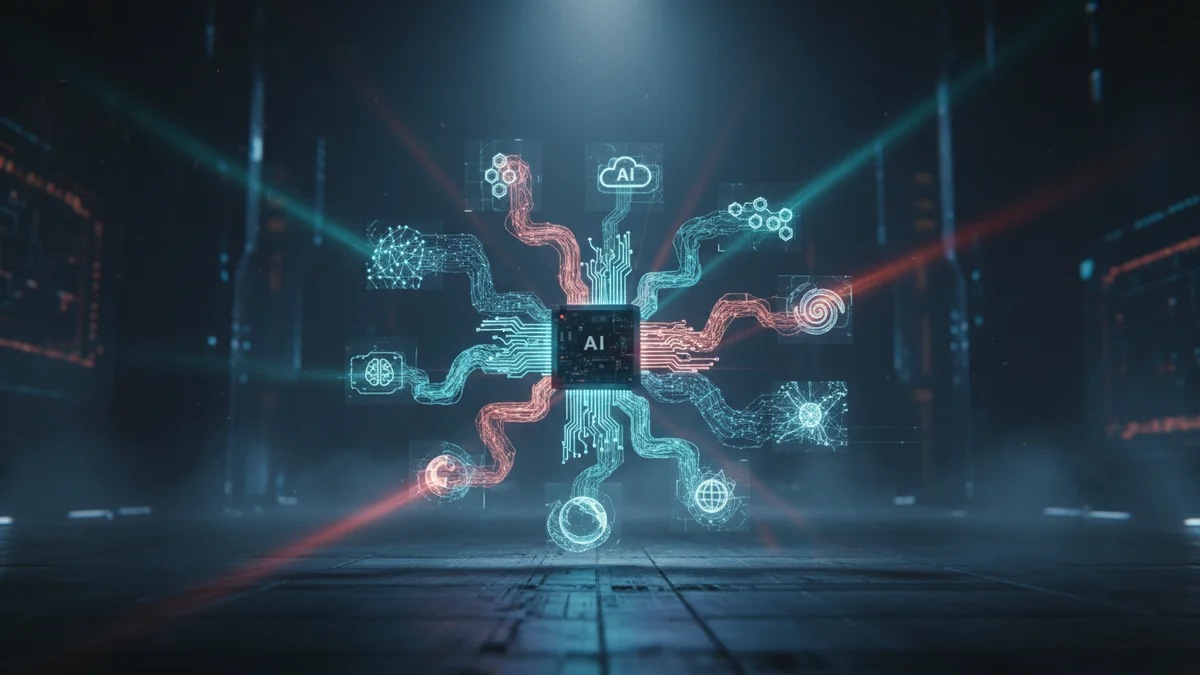
The adoption of AI and Machine Learning is set to be transformative.
- Business Integration: Companies will leverage AI for process optimization and better efficiency.
- Sector Applications: AI will enhance data analysis and personalization in healthcare, finance, and retail.
- Decision-Making Impact: Quick, data-driven decisions will lead to improved services and reduced costs.
2. Blockchain and Data Security
Blockchain technology is redefining security and transparency.
- Security Enhancement: An immutable ledger increases trust in transactions.
- Brazilian Use Cases: Companies will apply blockchain for product tracking and authentication.
- Implementation Challenges: Significant investment and expertise are required for effective use.
3. Internet of Things (IoT)
The rise of connected devices is set to revolutionize data collection.
- Device Connectivity: IoT enables communication among machines, generating valuable real-time data.
- Industrial Applications: Sensors will monitor and optimize production processes.
- Predictive Maintenance: Enhanced decision-making through real-time data will prevent downtime.
4. Cloud Computing
Migrating to the cloud will be a top priority for many businesses.
- Flexibility and Scalability: Cloud solutions will adapt resources based on demand, offering agility.
- Hybrid and Multi-Cloud Trends: The use of hybrid and multi-cloud environments will grow.
- Market Responsiveness: Quick adaptation to market changes will be facilitated by cloud technologies.
5. Augmented Reality and Virtual Reality
AR and VR technologies are set to enhance customer experiences and training.
- Customer Experience Transformation: Immersive training simulations will become commonplace.
- Tourism and Entertainment Examples: AR will be explored to enrich user interactions.
- Future Consumer Engagement: These technologies will redefine how consumers connect with products.
6. Automation and Robotics
Automation will significantly change business processes.
- Task Automation: Robots will handle repetitive tasks, allowing employees to focus on strategy.
- Manufacturing Examples: Factories will adopt robots for assembly and quality control tasks.
- Efficiency vs. Workforce Concerns: Automation raises questions about employment and job evolution.
7. Sustainability and Green Technology
Sustainability initiatives will become integral to business strategies.
- Commitment to Sustainability: Companies will increasingly adopt practices that lower environmental impact.
- Renewable Energy Investments: Brazilian firms are investing in sustainable processes and energy sources.
- Corporate Image Impact: Sustainability will be a key expectation for consumers.
Conclusion
Adapting to these technological trends is vital for businesses aiming to thrive in 2026. Those who embrace innovation will lead the charge, ensuring competitiveness in a rapidly evolving market.
Perguntas Frequentes
What are the main technology trends for 2026?
The key trends include AI, blockchain, IoT, cloud computing, AR/VR, automation, and sustainability practices.
How can AI benefit my business?
AI optimizes processes, enhances data analysis, and personalizes customer service.
What is blockchain and how can it be used?
Blockchain is a decentralized ledger technology that enhances security and transparency in transactions.
💡 Dica Pro: Consider integrating AI tools that specifically target process automation. This can lead to significant time savings and improved accuracy in operations.