Dicionário de IA
Don’t Get Left Behind: How Deep Learning is Revolutionizing Industries and Driving Innovation
Dr. Adrian Vale
LLM, AI Agents & AI Infrastructure Specialist
6 min read
Listen to Article
AI automated narration
LLM, AI Agents & AI Infrastructure Specialist
Deep learning is driving real change across industries by enhancing efficiency and optimizing processes. Discover its practical applications and how they can impact your business today.
Deep learning is no longer just a buzzword; it’s a transformative force reshaping industries and redefining the way businesses operate. By leveraging advanced computational power and vast amounts of data, deep learning is enabling organizations to optimize processes, uncover actionable insights, and make smarter decisions. From healthcare to finance, retail to autonomous vehicles, the applications of deep learning are vast and growing at an exponential pace.
In this article, we’ll explore how deep learning works, its historical context, its impact on various industries, and the challenges and opportunities it presents for businesses and professionals in the modern world.
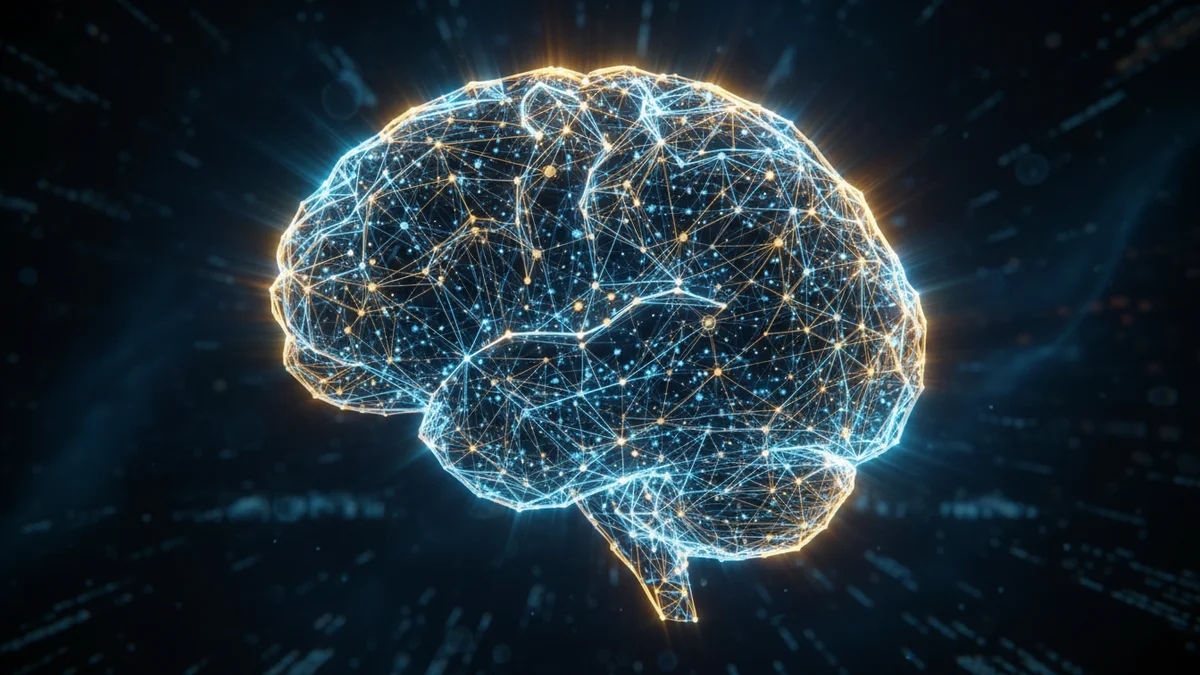
Deep learning is a subset of artificial intelligence (AI) and machine learning (ML) that mimics the way the human brain processes information. At its core are artificial neural networks, which are structured to resemble the neural networks of the human brain. These networks consist of layers of interconnected nodes, or "neurons," that process data in a hierarchical manner.
Unlike traditional machine learning models, which often require manual feature engineering, deep learning algorithms can automatically extract features and patterns directly from raw data. This makes them particularly effective for analyzing unstructured data such as images, audio, and text. For example:
The ability of deep learning systems to improve their performance over time as they process more data makes them a game-changer for businesses and researchers alike.
Deep learning’s roots trace back to the 1950s with the creation of the first artificial neural networks. However, progress stalled for decades due to limited computational power and insufficient data. Here’s a timeline of key milestones in deep learning’s evolution:
Today, deep learning is accessible to organizations of all sizes, thanks to cloud computing platforms and pre-trained models that reduce the barrier to entry.
Deep learning is not just a theoretical concept; it’s actively transforming industries by enabling groundbreaking applications. Here are some of the most significant areas of impact:
Deep learning is revolutionizing medical diagnostics and treatment. Algorithms can analyze medical images to detect diseases like cancer, often with accuracy comparable to or exceeding that of human specialists. For instance:
In the financial sector, deep learning is enhancing security, improving customer experiences, and optimizing operations:
Retailers are leveraging deep learning to better understand consumer behavior and optimize their operations:
The automotive industry is at the forefront of deep learning innovation, particularly in the development of autonomous vehicles:
While the potential of deep learning is immense, its implementation is not without challenges. Businesses and researchers must navigate several hurdles to fully realize its benefits:
Deep learning is not just a technological trend; it’s a paradigm shift that is transforming industries and redefining what’s possible in the digital age. From healthcare to automotive, its applications are already making a tangible impact, saving lives, optimizing operations, and driving innovation.
However, to fully harness the potential of deep learning, organizations must address the challenges of data quality, computational costs, and talent shortages. Investments in education, infrastructure, and ethical frameworks are critical to ensuring that deep learning serves as a force for good.
As we move forward, the organizations that embrace deep learning and adapt to its rapid advancements will be the ones that lead in innovation and competitiveness. For professionals, staying updated on the latest developments in deep learning and acquiring hands-on experience with tools like TensorFlow and PyTorch will be key to thriving in this transformative era.
Deep learning is not just changing everything—it’s changing it now. Don’t get left behind.
💡 Pro Tip: Start experimenting with pre-trained models available in TensorFlow Hub or PyTorch Hub to quickly implement deep learning in your projects.