IA Generativa
Google Gemini Stays Ad-Free as ChatGPT Embraces Ads: A Turning Point in AI Assistant Monetization?
Dr. Adrian Vale
LLM, AI Agents & AI Infrastructure Specialist
6 min read
Listen to Article
AI automated narration
LLM, AI Agents & AI Infrastructure Specialist
Google has announced that its AI assistant, Gemini, will not include ads, while OpenAI's ChatGPT is set to introduce advertisements. This divergence in monetization strategies could significantly impact user experience and market competition.
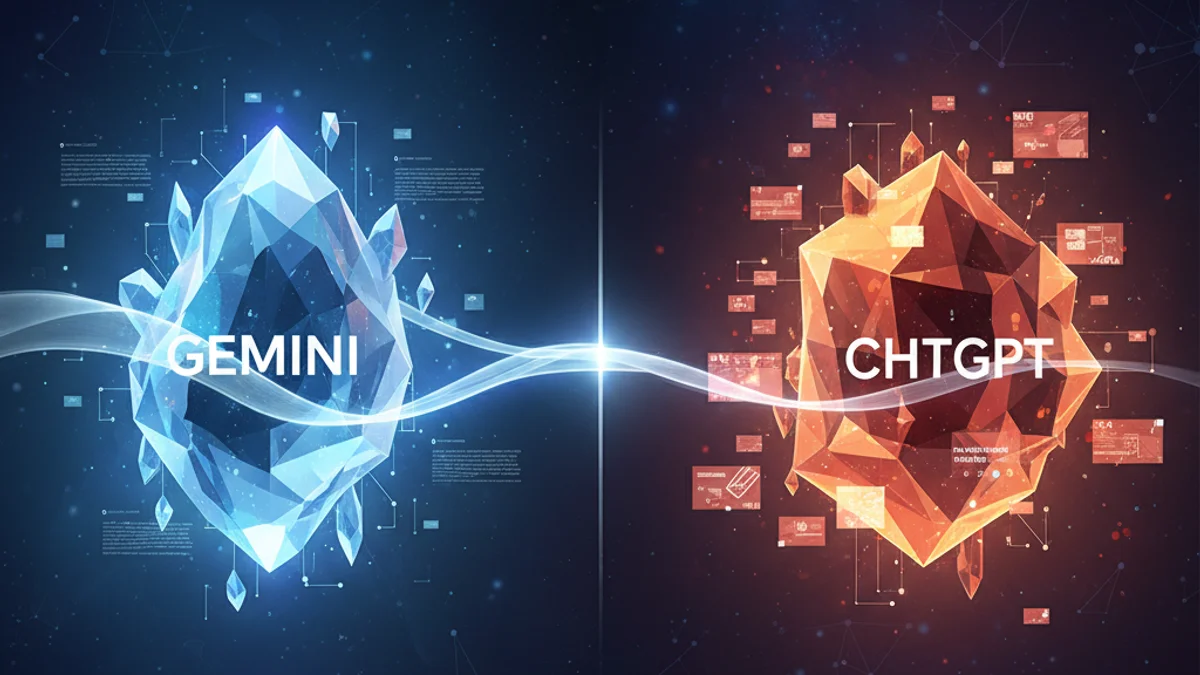
In the competitive landscape of AI-powered chat assistants, monetization strategies are emerging as a critical factor for differentiation. Recently, Google announced that its advanced AI assistant, Gemini, will remain ad-free, a bold decision that directly contrasts with OpenAI's approach for ChatGPT, which is introducing advertisements on its platform. These divergent paths could significantly influence user preferences and reshape the market dynamics of conversational AI.
OpenAI, the organization behind ChatGPT, has begun rolling out advertisements as a new revenue stream. This shift is particularly noteworthy because it affects both free-tier users and those subscribed to the $8/month ChatGPT Plus plan, raising eyebrows across the AI user community. While ads are a common monetization strategy in digital platforms, their inclusion in a conversational AI assistant introduces unique challenges and raises important questions about the quality of the user experience.
OpenAI's decision to include ads appears to be driven by the growing operational costs associated with maintaining and improving its large-scale language models. The organization has faced mounting expenses in areas such as server maintenance, data storage, and ongoing model training. Ads offer a way to supplement subscription revenue, which may not be sufficient to sustain the platform's exponential growth.
However, the introduction of ads has not been universally well-received. Many users have expressed concerns that advertisements could clutter the chat interface, disrupt the flow of conversations, and introduce biases into AI responses. For instance, if the AI prioritizes sponsored content, its responses may no longer feel as objective or trustworthy. These concerns are particularly significant given that ChatGPT has positioned itself as a tool for education, research, and professional use.
Social media platforms and forums have been rife with criticism from ChatGPT users. Many argue that paying subscribers should not have to endure advertisements, as their subscriptions were ostensibly meant to provide a premium, uninterrupted experience. This dissatisfaction could lead to a decline in user trust and loyalty, particularly if ads are perceived as intrusive or irrelevant to user queries.
In contrast to OpenAI's strategy, Google has taken a firm stance against introducing ads in its Gemini AI assistant. The company has stated that it is prioritizing user experience and long-term growth over immediate monetization. By keeping Gemini ad-free, Google aims to position its platform as a user-centric alternative, free from the potential irritations associated with ads.
Google's decision is not entirely altruistic; it is a calculated business strategy. By offering an ad-free experience, Google can potentially attract users who are frustrated with ChatGPT's new ad model. This move aligns with Google's broader ecosystem strategy, where the company often leverages its services to enhance user retention and engagement, subsequently capitalizing on other revenue streams like data analytics, cloud services, and hardware integration.
For example, Gemini could be seamlessly integrated with Google's existing suite of products, such as Google Workspace, Android, and Google Search. This ecosystem approach allows Google to generate revenue indirectly while maintaining a positive user experience within Gemini.
Another critical factor in Google's ad-free strategy is its emphasis on trust and privacy. In an era where digital platforms are increasingly scrutinized for how they handle user data, Google's decision to avoid ads in Gemini could be a way to differentiate itself as a platform that respects user privacy. By not introducing ads, Google minimizes the risk of being accused of using AI interactions to serve targeted advertising, an issue that has plagued other platforms in the past.
The contrasting monetization approaches of Google and OpenAI offer valuable insights into their respective business strategies and the potential long-term impacts on the AI assistant market.
These divergent strategies highlight a broader debate within the tech industry: should AI platforms prioritize immediate revenue generation or focus on long-term growth through user satisfaction? The answer to this question could have far-reaching implications for the future of AI development and adoption.
Users are likely to gravitate toward the platform that best meets their needs for functionality, trust, and ease of use. If Google's ad-free approach proves popular, it could pressure other AI platforms to adopt similar models, shifting the industry away from ad-based monetization. Conversely, if OpenAI successfully integrates ads without significantly compromising user experience, it may validate this model as a viable revenue strategy for AI platforms.
The competition between Google and OpenAI is indicative of the broader race to dominate the AI assistant market. As these platforms evolve, their success will depend not only on technological advancements but also on their ability to align their monetization strategies with user expectations. The choices made today could determine the industry leaders of tomorrow.
Google’s commitment to keeping Gemini ad-free is a strategic move that underscores its focus on user satisfaction and long-term growth. In stark contrast, OpenAI’s decision to introduce ads into ChatGPT reflects a more immediate approach to monetization, albeit one that risks alienating its user base. These differing strategies highlight the complexities of balancing revenue generation with user experience in the rapidly evolving AI assistant market.
For users, the choice between Gemini and ChatGPT will likely hinge on their tolerance for ads and their trust in the platform’s objectivity and privacy practices. For the industry, these developments raise important questions about the sustainability of various monetization models and their impact on innovation and competition.
As the AI landscape continues to evolve, the strategies adopted by Google, OpenAI, and other players will not only shape the future of AI assistants but also set the tone for how technology companies approach the delicate balance between profitability and user satisfaction.
Sources: