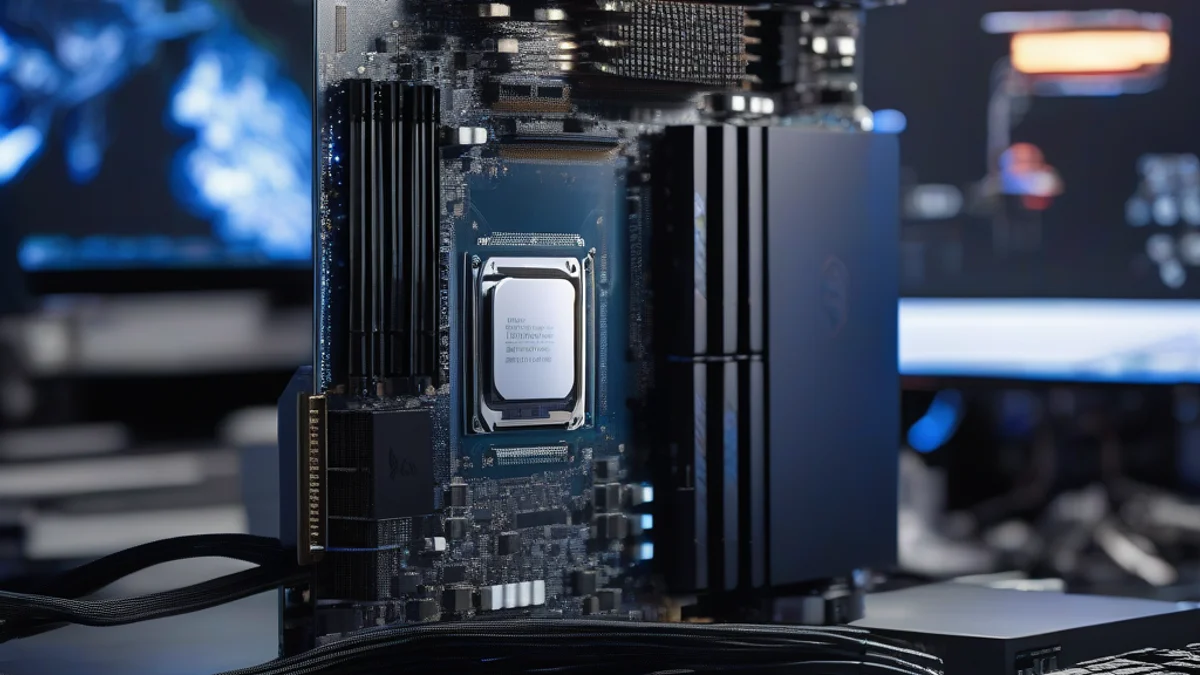
The GPU Bubble: A Growing Concern
The GPU market is experiencing what some analysts describe as a "bubble," where demand and speculation have driven prices beyond their intrinsic value. This phenomenon is largely fueled by the AI industry's intensive need for GPUs to handle tasks like training large language models (LLMs) and performing complex inference operations. NVIDIA, the sector's leading player, reported record-breaking profits in 2025, while Moondream has achieved 35% efficiency improvements in AI inference through its Photon engine, according to Moondream.
Key Drivers Behind the GPU Bubble
Unprecedented Investments in AI
- Major players like OpenAI, Google, and Meta have collectively invested billions in building AI-focused data centers brimming with GPUs.
- Supply chain bottlenecks have exacerbated shortages, causing hardware prices to skyrocket. For instance, RAM prices have doubled since 2025, as reported by The Backdash.
NVIDIA's Market Dominance
- With its CUDA architecture forming the backbone of AI workflows, NVIDIA has captured a significant share of the GPU market.
- Emerging competitors like Moondream are challenging this dominance, offering technologies that reduce real-time inference latency to just 33ms.
The Looming Bubble Burst: What’s at Stake?
Economic Repercussions
- Price Declines: A significant drop in GPU prices is anticipated within the next 12–18 months, driven by reduced demand and oversupply.
- Startup Vulnerability: Companies heavily reliant on high-priced hardware could face financial difficulties as their investments lose value.
Strategic Shifts for Enterprises
- Businesses must reassess their hardware strategies to mitigate risks associated with potential devaluation.
- Diversifying computing resources, such as exploring alternative technologies like ASICs, may become a necessity.
Emerging Trends in Computing and AI
The Rise of ASICs and Quantum Computing
- ASICs (Application-Specific Integrated Circuits): These chips are becoming attractive for specialized tasks due to their cost and energy efficiency.
- Quantum Computing: While promising, quantum technology still faces challenges related to scalability and practical implementation.
Changing Investment Patterns
- Investors and stakeholders are increasingly cautious about pouring money into hardware-heavy AI projects.
- Companies like NVIDIA may need to diversify their revenue streams to reduce dependency on GPU sales.
Sector-Wide Implications
For Developers
- Skill Adaptation: Developers will need to learn new architectures like ASICs and adjust algorithms for optimized performance.
- Efficiency Focus: As hardware evolves, resource optimization will become critical.
For Businesses
- Cost Management: Startups must prepare for potential GPU price drops and consider the long-term viability of their hardware investments.
- Technology Diversification: Companies may explore alternative computing solutions to reduce reliance on GPUs.
Key Trends to Monitor
- GPU and RAM pricing over the next 12–18 months.
- Market adoption of ASICs and early quantum computing solutions.
- Strategic responses from industry leaders like NVIDIA and Moondream as the market evolves.
References
Frequently Asked Questions
What is causing the GPU market saturation?
The GPU market saturation is primarily driven by the high demand for GPUs in AI applications like training large language models, combined with supply chain constraints and speculative investments.
What are the potential consequences of a GPU price collapse?
A GPU price collapse could lead to financial strain for startups heavily invested in high-priced hardware and force companies to reassess their hardware strategies to avoid losses.
Are there alternatives to GPUs for AI applications?
Yes, alternatives like ASICs offer lower costs and higher efficiency for specific tasks, while quantum computing holds potential for the future despite current scalability challenges.
💡 Dica Pro: Developers should start learning how to optimize AI models for alternative hardware like ASICs, as these chips are expected to play a significant role in reducing operational costs in the near future.