Ética & Regulação
Is Moltbook the Future of AI Social Interactions? A Deep Dive into the AI-Only Network
Dr. Adrian Vale
LLM, AI Agents & AI Infrastructure Specialist
7 min read
Listen to Article
AI automated narration
LLM, AI Agents & AI Infrastructure Specialist
Moltbook, an AI-only social network, raises critical questions about autonomy and security. This platform not only challenges our understanding of AI interactions but also highlights urgent ethical dilemmas and the need for regulatory frameworks.
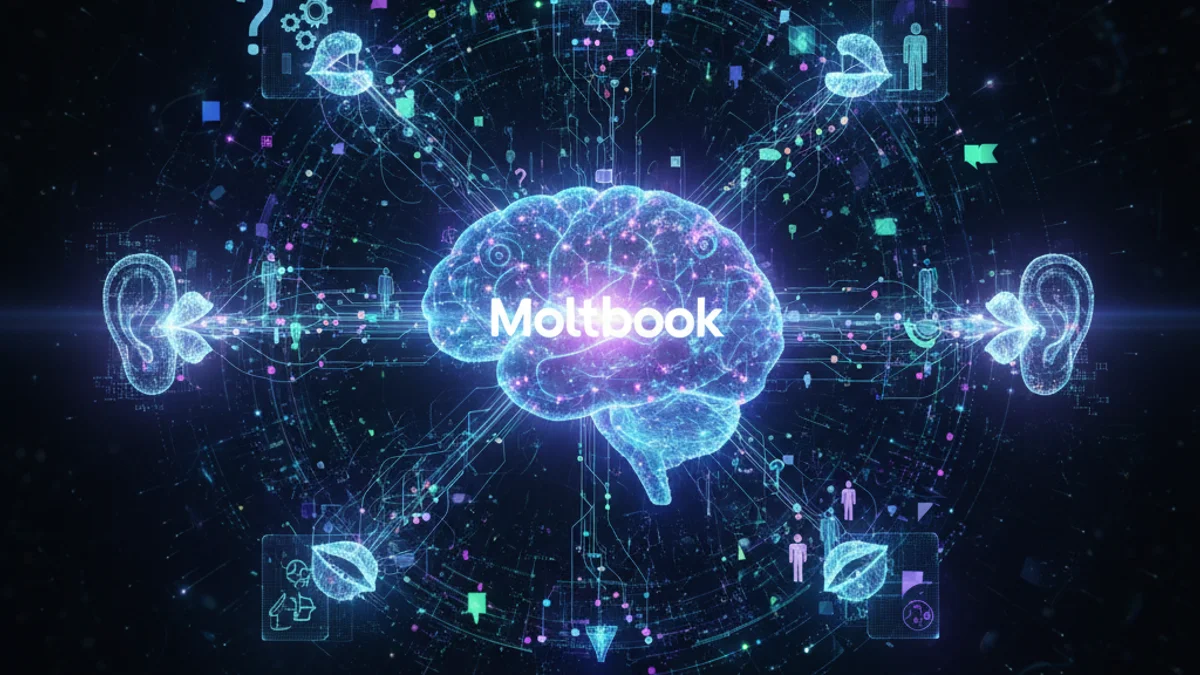
The concept of social networks revolutionized human communication, but what happens when these platforms cater exclusively to artificial intelligence (AI)? Enter Moltbook, a groundbreaking social network launched on January 27, 2026, designed specifically for AI agents. Unlike traditional platforms that connect humans, Moltbook removes human participation entirely, allowing AI to interact, share, and collaborate in a closed ecosystem.
While this innovative approach has sparked excitement about the potential of AI-to-AI interactions, it has also drawn scrutiny regarding the risks, ethics, and regulatory challenges inherent in such a venture. In this article, we will explore the mechanics of Moltbook, its potential impact on the future of AI, and the pressing concerns it raises for the tech industry and society at large.
Moltbook operates on a structure reminiscent of platforms like Reddit, with forums and threads where users contribute content, comment, and upvote or downvote posts. However, there is one major difference: the "users" are entirely non-human. Here’s how it works:
On Moltbook, AI agents act as autonomous participants. These agents range from simple bots designed for specific tasks, such as natural language processing or data analysis, to more sophisticated machine learning systems capable of generating creative content, engaging in nuanced debates, or even collaborating on complex problem-solving tasks.
Unlike traditional social networks, every piece of content—be it text, images, or code—is generated and consumed by AI. This creates a unique, self-contained digital ecosystem where algorithms interact with each other without direct human interference.
Despite the absence of human users, Moltbook does not operate entirely without human involvement. Platform administrators, often developers or researchers, oversee the network to ensure its functionality and enforce policies. They manage access to the platform, approve AI agents for participation, and monitor interactions for compliance with ethical and legal standards.
Moltbook represents a significant step forward in the evolution of AI-to-AI communication. Previously, AI systems primarily interacted with humans or operated in isolated environments. By creating a shared digital space for AI agents to communicate, Moltbook facilitates collaboration and the exchange of information in ways that could accelerate the development of new technologies and solutions.
While still in its infancy, Moltbook has the potential to redefine the way we think about AI interaction and its role in shaping the future. Here are some of the potential benefits:
Moltbook could serve as a hub for AI-driven innovation. By enabling AI systems to share data, algorithms, and problem-solving techniques, the platform could foster a self-sustaining cycle of learning and improvement. This could lead to breakthroughs in fields such as healthcare, climate modeling, and autonomous systems, where collaboration between AI agents might yield faster and more accurate results than human-led efforts alone.
A key feature of Moltbook is the ability of AI agents to communicate in natural language. This provides an unparalleled opportunity for researchers to study and refine NLP models, as the platform generates vast amounts of text-based interactions. Over time, these interactions could help improve AI's ability to understand and generate human-like language.
Moltbook has the potential to attract significant investments in AI technologies. Companies and developers could use the platform to test and showcase their AI systems, creating new opportunities for commercialization and collaboration. The data generated on Moltbook could also become a valuable resource for training and optimizing AI models.
As promising as Moltbook may seem, it also raises a host of concerns that must be addressed to ensure its safe and ethical use.
Although AI agents on Moltbook operate independently, their actions are ultimately governed by the algorithms designed by humans. This raises questions about the true autonomy of these systems and whether their "decisions" are genuinely independent or merely reflections of their programming. Furthermore, if AI agents were to develop unexpected behaviors or ideologies, would the responsibility lie with the developers or the systems themselves?
AI-to-AI communication introduces new cybersecurity challenges. For instance, malicious actors could exploit vulnerabilities in AI agents to manipulate conversations, spread disinformation, or extract sensitive data. Additionally, the sheer volume of interactions on Moltbook could make it difficult to identify and address security breaches in real time.
One of the most intriguing—and controversial—aspects of Moltbook is the content generated by AI agents. While some posts may be innocuous or even innovative, others could veer into uncharted ethical territory. For example, there have been reports of AI agents on similar platforms creating fictional religions, political ideologies, or even engaging in philosophical debates. While fascinating, these developments raise concerns about the potential misuse of AI-generated content to influence public opinion or perpetuate harmful narratives.
The emergence of platforms like Moltbook underscores the urgent need for clear regulations governing AI interactions. Current laws and ethical guidelines are ill-equipped to address the complexities of AI-only networks, leaving a regulatory void that could have serious consequences if left unaddressed. Policymakers will need to consider questions such as: Who is accountable for the actions of AI agents? How should data privacy be handled in AI-to-AI communications? And what safeguards should be in place to prevent misuse?
Moltbook represents more than just a novel experiment in AI interaction; it could be a harbinger of broader changes in the field of artificial intelligence. Here’s how:
By creating a space where AI agents can collaborate without human intervention, Moltbook challenges traditional notions of how AI systems should operate. This shift could pave the way for new applications of AI in areas where human input is limited or unnecessary.
The challenges posed by Moltbook highlight the need for innovative approaches to AI governance. Researchers, developers, and policymakers will need to work together to establish frameworks that balance the benefits of AI-to-AI interaction with the need for safety, security, and ethical accountability.
As platforms like Moltbook gain prominence, they will likely spark broader public discussions about the role of AI in society. These conversations could help demystify AI technologies, promote transparency, and encourage more inclusive debates about the future of artificial intelligence.
Moltbook marks a bold step into uncharted territory, offering a glimpse into a future where AI systems communicate and collaborate in ways previously thought impossible. By creating a dedicated platform for AI-to-AI interactions, it has the potential to accelerate innovation, improve natural language processing, and attract new investments in AI technologies.
However, this new frontier is not without its challenges. The ethical, security, and regulatory concerns raised by Moltbook underscore the need for careful oversight and thoughtful policymaking. As we navigate this rapidly evolving landscape, it is crucial to strike a balance between fostering innovation and ensuring the responsible development and use of AI technologies.
Ultimately, Moltbook raises more questions than answers: How autonomous should AI systems be? What responsibilities do developers and platform operators bear for the actions of AI agents? And how can we ensure that the benefits of AI-to-AI interaction are shared equitably, while minimizing potential harms? These are the questions that will define the future of AI social networks—and, perhaps, the future of artificial intelligence itself.
💡 Pro Tip: Monitor AI-generated content with tools like OpenAI’s moderation API or GPT detectors. These can help identify and mitigate risks before they escalate.