Big Tech
Financial Tensions Between OpenAI and Nvidia: Implications for the AI Landscape
Dr. Adrian Vale
LLM, AI Agents & AI Infrastructure Specialist
7 min read
Listen to Article
AI automated narration
LLM, AI Agents & AI Infrastructure Specialist
OpenAI and Nvidia are facing significant financial tensions, partly fueled by Elon Musk's allegations. Understanding these dynamics is crucial for stakeholders looking to navigate potential market impacts effectively.
The ongoing financial tensions between OpenAI and Nvidia have become a focal point in the technology sector, raising critical questions about ethics, transparency, and strategic partnerships. The situation escalated when tech magnate Elon Musk made bold allegations, demanding compensation for what he described as "unjust gains" by OpenAI and Microsoft. These developments have sent ripples through the AI community, sparking debates on the future of innovation, investor confidence, and industry collaboration.
This article dives deep into the core of these tensions, exploring Musk's claims, Nvidia's investment decisions, market reactions, and the broader implications for the AI ecosystem.
Elon Musk, co-founder of OpenAI and CEO of Tesla and SpaceX, has become a polarizing figure in the world of artificial intelligence. Musk alleges that OpenAI, a company he once helped to establish as a non-profit organization focused on safe AI development, has deviated from its original mission. According to Musk, OpenAI’s transition into a for-profit enterprise—backed by significant investments from Microsoft—has led to what he terms "unjust financial gains."
Musk's claim for $134 billion in compensation from OpenAI and Microsoft is unprecedented in its scale and implications. He argues that these gains were achieved by leveraging his initial vision and contributions to OpenAI, which he asserts have been exploited for profit-driven motives. While the legal grounds for such a demand remain unclear, the sheer magnitude of the claim has captured the attention of industry stakeholders and legal experts alike.
Musk has also raised broader concerns about the ethical trajectory of AI development. He accuses OpenAI of prioritizing commercial interests over the originally stated goal of developing AI systems that benefit humanity as a whole. This critique resonates with ongoing debates about the ethical responsibilities of tech companies, particularly those that wield significant influence over emerging technologies.
If Musk's allegations gain traction, they could lead to increased scrutiny of the AI sector, with regulators and policymakers demanding greater transparency and accountability from leading firms.
Nvidia, a leading player in the semiconductor and AI hardware markets, has reportedly paused a planned $100 billion investment in OpenAI. This decision comes amidst growing uncertainty about the return on investment and the long-term viability of the partnership.
Nvidia's GPUs (graphics processing units) are a cornerstone of modern AI infrastructure, powering everything from machine learning models to autonomous driving systems. The company's collaboration with OpenAI has been instrumental in advancing cutting-edge technologies like generative AI and large language models.
The decision to halt such a significant investment is not taken lightly. According to industry insiders, Nvidia's leadership is concerned about several factors:
This pause underscores the fragility of even the most high-profile collaborations in the AI sector, highlighting the need for clear communication and shared objectives among partners.
The financial markets have reacted swiftly to these developments, reflecting the uncertainty surrounding the future of OpenAI and Nvidia's partnership. Stock price volatility for both companies has increased, with analysts citing concerns about potential legal battles, shifts in strategic priorities, and the overall stability of the AI sector.
Investor confidence in AI companies has been shaken by the recent controversies. While some view these events as temporary setbacks, others worry that they could signal deeper structural issues within the industry. For instance:
The implications of these tensions extend beyond OpenAI and Nvidia. They raise critical questions about the governance of AI research and development, including:
The financial tensions between OpenAI and Nvidia, compounded by Elon Musk's allegations, mark a pivotal moment for the AI industry. These events highlight the complex interplay between innovation, ethics, and financial interests, raising critical questions about the future trajectory of artificial intelligence.
To restore investor confidence and ensure sustainable growth, companies in the AI sector must prioritize transparency, ethical practices, and clear communication. This includes addressing concerns about the misuse of power, aligning business models with societal benefits, and fostering trust among stakeholders.
While the immediate outlook remains uncertain, the long-term implications could be transformative. The unfolding developments serve as a wake-up call for the industry, emphasizing the need for a balanced approach that reconciles commercial ambitions with the broader goal of advancing technology for the greater good.
As these tensions play out, staying informed about the latest developments will be crucial for investors, policymakers, and technology enthusiasts alike. The stakes are high, and the decisions made today will shape the future of AI for years to come.
For those keeping a close eye on the financial and strategic moves within the AI sector, monitoring insider trading activity can provide valuable insights. Significant trades by executives and major stakeholders often signal underlying confidence—or lack thereof—in a company's future prospects. Tools and platforms that track these activities can be indispensable for informed decision-making.
To ensure you never miss a critical update on the evolving AI landscape, subscribe to our newsletter. Gain access to in-depth analyses, expert opinions, and real-time news that keep you ahead of the curve.
Musk's allegations may lead to increased regulatory scrutiny, legal disputes, and market volatility, potentially affecting investor confidence and slowing innovation in the sector.
Nvidia's decision to pause its $100 billion investment in OpenAI likely stems from concerns about return on investment, market volatility, and potential reputational risks associated with Musk's allegations.
The tensions could reshape the AI landscape by influencing investor behavior, prompting regulatory changes, and altering the dynamics of collaboration and competition within the industry.
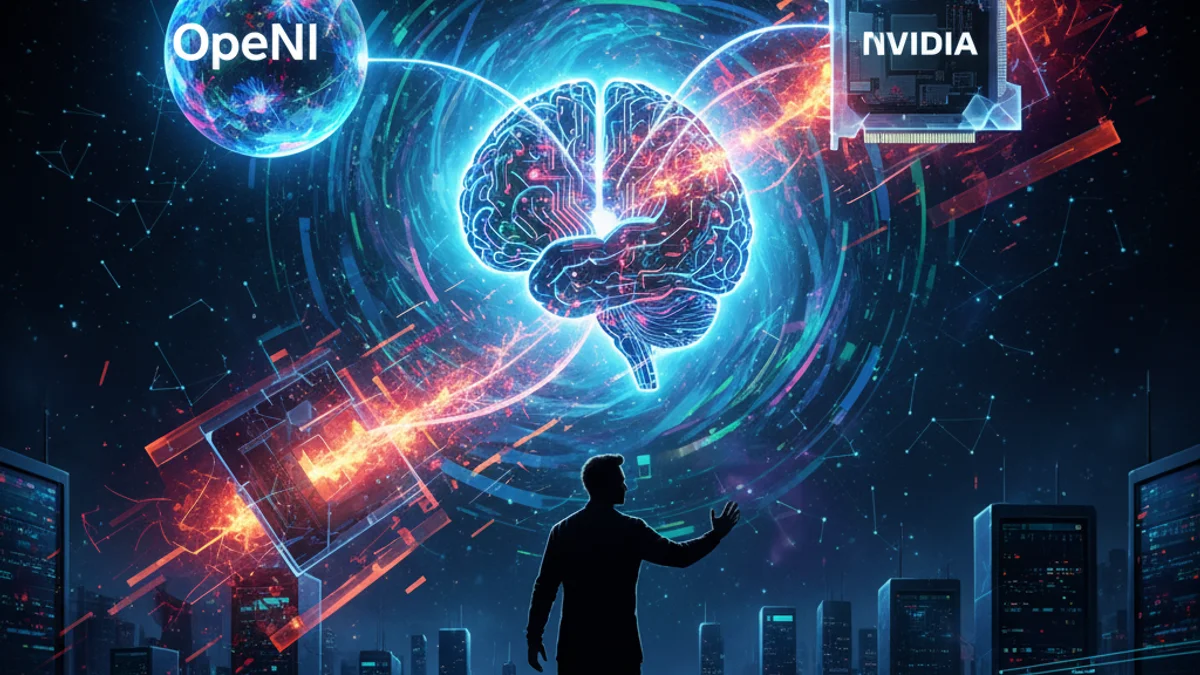
Image Alt Text: Visual representation of financial tensions between OpenAI and Nvidia, featuring key figures and potential outcomes.