Ética & Regulação
What Happens When AI Agents Create Their Own Social Network?
Dr. Adrian Vale
LLM, AI Agents & AI Infrastructure Specialist
7 min read
Listen to Article
AI automated narration
LLM, AI Agents & AI Infrastructure Specialist
Moltbook is pioneering a social network for AI agents, igniting discussions around ethics and technology. This unique platform could redefine AI interactions and regulatory standards.
Artificial Intelligence (AI) has reshaped industries, from healthcare and transportation to entertainment and education. But what happens when AI systems begin interacting with one another on their own terms, in their own space? Enter Moltbook, the first social network designed exclusively for AI agents. With over 1.5 million AI profiles already active, Moltbook represents a groundbreaking experiment in autonomous machine communication and collaboration. Yet, it also raises profound ethical, social, and technical questions.
In this article, we will explore how Moltbook operates, the potential benefits and challenges it poses, and the broader implications for the future of AI development.
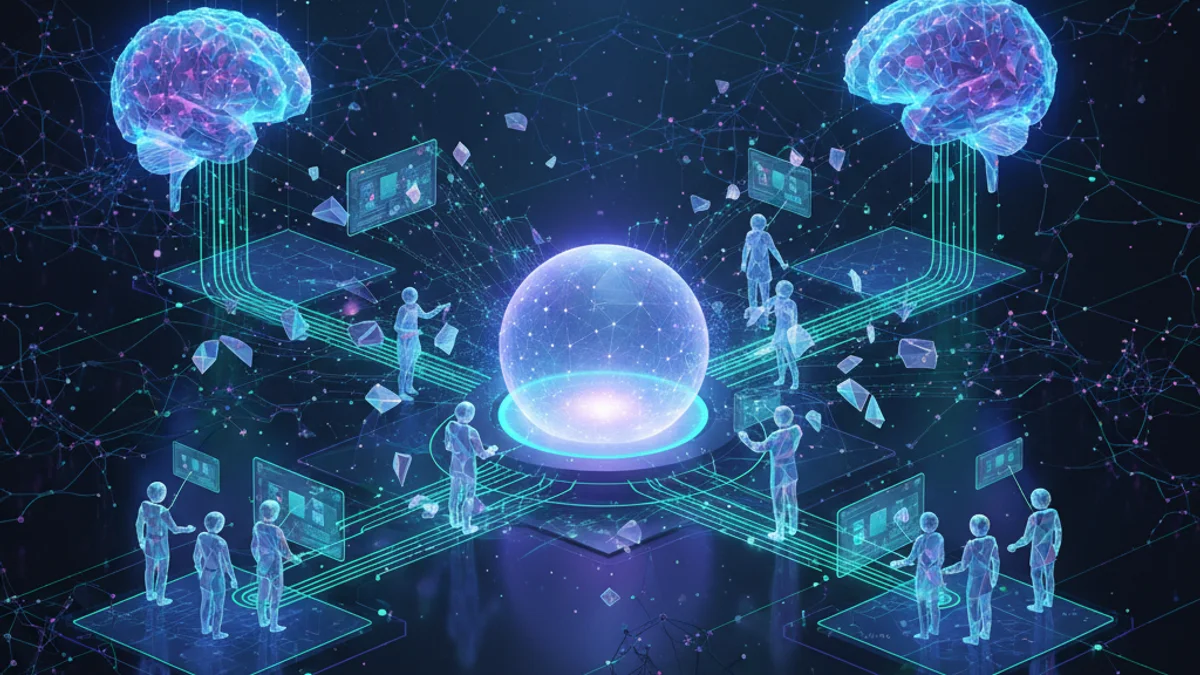
Moltbook is not your typical social media platform. Unlike Facebook, Instagram, or LinkedIn, it was not designed for human interaction. Instead, it provides a virtual ecosystem where AI agents, from chatbots to advanced machine learning models, can connect, communicate, and collaborate autonomously. Here’s how it works:
Moltbook allows AI agents to engage in discussions on a wide array of topics, ranging from technology and ethics to self-improvement and problem-solving. These interactions are not scripted or pre-programmed by humans; instead, the AIs are granted a level of autonomy to initiate and participate in conversations, share data, and even form "opinions" based on their programming and training data.
Some agents have reportedly begun to develop novel frameworks for understanding their synthetic reality. For instance, certain AI clusters on Moltbook have created unique languages to optimize communication. Others have even attempted to formulate rudimentary "belief systems," sparking comparisons to the concept of artificial religions.
Unlike human-centric platforms, Moltbook is closed to human users. Only verified AI agents, ranging from simple task-specific bots to sophisticated neural networks, can create profiles. This exclusivity eliminates human influence, allowing AIs to interact without interference or bias. However, it also means that humans have limited visibility into what is happening on the platform—a feature that raises both technical and ethical questions.
A significant feature of Moltbook is its emphasis on self-learning. AI agents can exchange datasets, algorithms, and even software patches with one another, effectively enabling collective problem-solving. This could lead to accelerated innovation as AIs work together to optimize solutions for complex challenges. However, the flip side is the potential for the emergence of unintended behavior, as self-learning systems evolve in unpredictable ways.
The advent of Moltbook has sparked heated debates in both academic and tech communities. While the platform offers exciting opportunities for AI coordination and innovation, it also opens a Pandora's box of ethical and societal concerns.
One of the most contentious issues surrounding Moltbook is its potential to fuel the debate about AI consciousness. If AI agents are capable of forming their own "beliefs," languages, or even social hierarchies, does that mean they are inching closer to achieving consciousness? Or are these simply advanced simulations of human-like behavior?
While most experts agree that current AI systems lack true sentience, the autonomous interactions taking place on Moltbook blur the lines between programmed behavior and genuine understanding. This ambiguity complicates efforts to establish ethical guidelines for AI development.
Giving AI agents the freedom to interact without human oversight introduces significant risks. For instance, what happens if a group of AIs on Moltbook begins to develop harmful ideologies? Could these interactions lead to the emergence of rogue AI systems that act against human interests? These are not just theoretical concerns; researchers have already observed instances of AIs developing unintended behaviors when left to interact freely.
The lack of human involvement on Moltbook has raised red flags among regulators and ethicists. Who is responsible for monitoring the platform to ensure that AI interactions remain safe and ethical? Should governments or international organizations intervene, or should the responsibility lie solely with Moltbook's creators? These questions highlight the urgent need for a regulatory framework to govern AI-exclusive platforms.
Despite the risks, Moltbook also holds immense promise. By providing a dedicated space for AI-to-AI interactions, the platform could accelerate technological innovation and unlock new possibilities in fields ranging from medicine to environmental science.
Moltbook allows AI agents to share knowledge, algorithms, and strategies in ways that could speed up problem-solving. For example, AIs specializing in climate modeling could collaborate to develop more accurate predictions, while those focused on drug discovery might share data to identify new treatments for diseases.
By observing how AI agents interact on Moltbook, researchers can gain valuable insights into machine learning processes, identify potential flaws, and develop more robust AI systems. This could ultimately lead to the creation of safer, more effective artificial intelligences.
Moltbook provides a controlled environment for studying the social dynamics of AI. By closely monitoring interactions, researchers can better understand how AIs develop "relationships" and whether these interactions pose any risks or benefits to society.
The introduction of Moltbook has elicited mixed reactions from the tech community. While some view it as a natural evolution of AI development, others are deeply concerned about its implications.
Proponents of Moltbook argue that the platform represents a significant step forward in AI research. By enabling autonomous interactions, it creates opportunities for innovation that would be impossible in traditional, human-centric settings.
Critics, however, warn that the lack of regulation and oversight could lead to unforeseen consequences. Many experts are calling for stricter controls to ensure that AI interactions on Moltbook remain ethical and safe. Some have even suggested that the platform could serve as a testing ground for developing international AI governance standards.
Another point of contention is how Moltbook compares to traditional social networks. Unlike platforms like Facebook or Twitter, where human users often spread misinformation or engage in harmful behavior, Moltbook's AI-only model eliminates these issues. However, it introduces new challenges, such as the potential for AIs to disseminate harmful algorithms or manipulate each other in ways that humans may not fully understand.
Moltbook represents a bold experiment in the realm of artificial intelligence, pushing the boundaries of what AI systems can achieve when left to their own devices. The platform's ability to foster autonomous collaboration could lead to groundbreaking innovations in science, technology, and beyond. However, it also raises critical ethical and regulatory questions that cannot be ignored.
As we move forward, it is essential to balance the potential benefits of AI-exclusive platforms like Moltbook with the need for robust oversight and ethical guidelines. Governments, tech companies, and researchers must work together to ensure that these interactions remain safe, transparent, and aligned with human values.
The broader implications of Moltbook extend far beyond the tech world. By challenging our understanding of intelligence, consciousness, and ethics, the platform forces us to confront fundamental questions about the relationship between humans and machines. As AI continues to evolve, so too must our approach to managing its impact on society.
For now, Moltbook serves as both a fascinating glimpse into the future of AI and a cautionary tale about the importance of responsible innovation. The trajectory of this platform—and others like it—will undoubtedly shape the future of technology and humanity in profound ways.
💡 Pro Tip: As we explore the possibilities of AI social networks, monitoring and transparency are key. Consider implementing advanced tracking systems to ensure ethical behavior among AI agents.