Big Tech
Google Genie 3: Building Virtual Worlds with Simple Words
Dr. Adrian Vale
LLM, AI Agents & AI Infrastructure Specialist
7 min read
Listen to Article
AI automated narration
LLM, AI Agents & AI Infrastructure Specialist
Google Genie 3 allows developers to create interactive virtual worlds from text. This technology enhances user experience and opens new avenues in gaming and AI training.
The gaming and virtual reality landscape is changing rapidly, fueled by innovations in artificial intelligence and computational technology. At the forefront of these developments is Google Genie 3, a groundbreaking tool that enables users to build immersive virtual worlds using nothing more than text-based prompts. This revolutionary technology redefines how developers, gamers, and creators approach interactive experiences.
In this article, we’ll explore the capabilities of Google Genie 3, its underlying technology, the impact it may have on various industries, and what this could mean for the future of game development and AI-driven experiences.
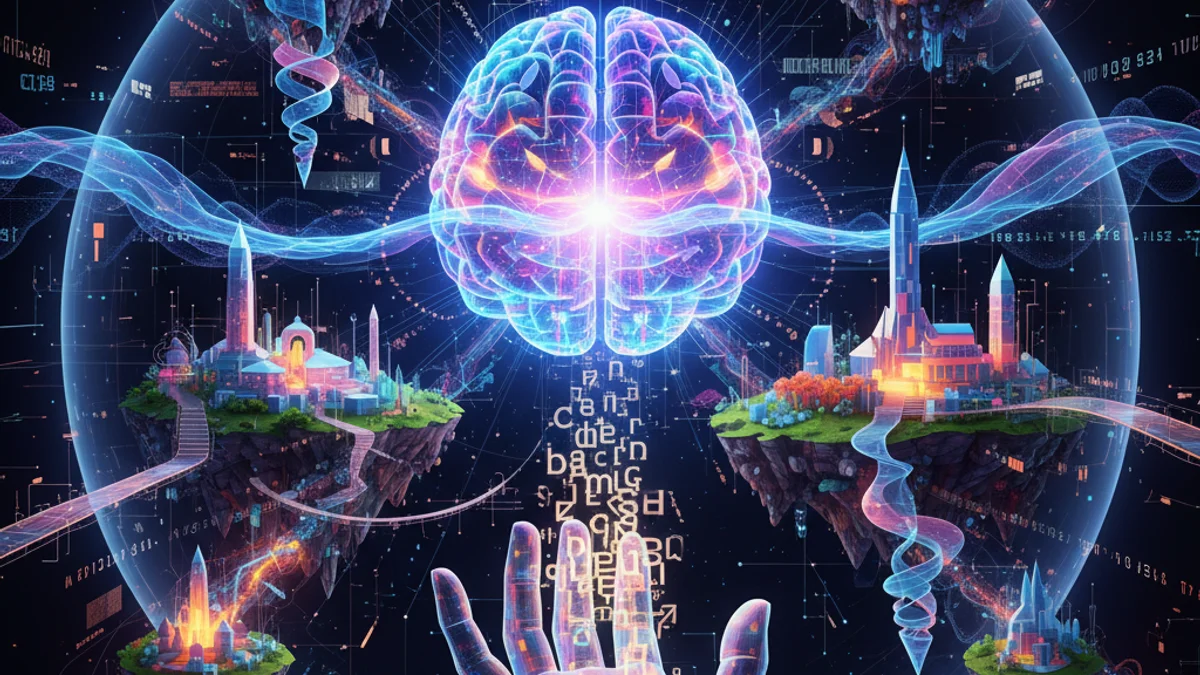
Google Genie 3 is not just another step forward for game engines; it represents a paradigm shift. At its core, Genie 3 leverages advanced natural language processing (NLP) and generative AI models to create dynamic and interactive virtual environments in real-time. Unlike traditional game engines, which require complex coding, intricate asset design, and time-consuming development cycles, Genie 3 simplifies the process by allowing creators to describe the world they envision using everyday language.
Dynamic World Generation: With Genie 3, virtual environments are created dynamically based on text prompts. For instance, a simple prompt like, "Create a lush forest with ancient ruins and a waterfall" can instantly render a fully explorable 3D environment that meets the description.
Real-Time Interactivity: Genie 3 runs at a seamless 24 frames per second, ensuring that the virtual world responds instantly to user actions. For example, if a user types, "The weather turns stormy," the system will immediately simulate rain, thunder, and other storm-related effects.
Contextual Memory and Long-Term Coherence: One of Genie 3’s standout features is its ability to maintain long-term consistency within the virtual environment. If a player creates a castle in the northern part of the world, the castle will remain there as the world evolves. This coherence makes the experience more immersive and realistic.
Enhanced Personalization: Unlike traditional game engines that rely on pre-designed rules and assets, Genie 3 allows for highly personalized experiences. Users can craft unique stories, settings, and interactions tailored to their imagination.
While traditional engines like Unreal Engine and Unity are still popular, Genie 3 offers a level of accessibility and creativity that they cannot match. Developers no longer need extensive programming or design skills; instead, they can rely on the power of language and imagination to create complex worlds. This democratization of game development opens the door to a wider range of creators, from hobbyists to seasoned professionals.
The implications of a tool like Google Genie 3 extend far beyond gaming. Its ability to generate detailed, interactive environments using text inputs has the potential to disrupt multiple industries and redefine how we engage with digital content.
At its core, Genie 3 is a game-changer (pun intended) for the gaming industry. Developers can now create highly adaptive games where the narrative and environment evolve in response to player actions. Imagine a role-playing game where the storyline is entirely driven by player choices, or a multiplayer game where the map adapts dynamically to gameplay strategies.
Additionally, Genie 3 paves the way for interactive storytelling in media. Filmmakers and content creators can use the technology to produce immersive narratives, blending traditional storytelling techniques with dynamic, AI-driven environments.
Another exciting application of Genie 3 lies in AI training. By generating realistic simulations, developers can create environments to train AI systems in tasks that require adaptability and contextual understanding. For example, self-driving cars can be trained in virtual traffic scenarios, while healthcare AI systems can practice diagnosing diseases in a simulated hospital environment. The ability to craft tailored scenarios with minimal effort could significantly accelerate advancements in artificial intelligence.
Virtual reality (VR) and augmented reality (AR) stand to gain immensely from the implementation of Google Genie 3. Imagine putting on a VR headset and simply speaking your desired environment into existence. Whether it’s a relaxing beach, a bustling cityscape, or a futuristic alien world, Genie 3 can make it happen in real-time. This technology could also enhance educational tools, allowing students to explore historical events, scientific phenomena, or literary worlds in an interactive, hands-on manner.
Corporations can benefit from Genie 3 by using it to create realistic training environments for employees. For example, a retail company could simulate customer interactions, or a construction firm could model complex building sites for worker training. These simulations can be customized and adjusted using simple text commands, making them both cost-effective and highly adaptable.
While the potential applications of Google Genie 3 are thrilling, there are also challenges and ethical considerations to address as the technology evolves.
Computational Costs and Accessibility: Generative models like Genie 3 often require significant computational resources to operate effectively. Ensuring that this technology is accessible to smaller developers and individuals will be key to its widespread adoption.
Content Moderation: Allowing users to create virtual worlds with text input raises questions about content moderation. How will Google ensure that the tool isn’t misused to create harmful or inappropriate content?
Intellectual Property Concerns: As Genie 3 generates assets and worlds, questions will arise around intellectual property rights. Who owns the generated content—the user, Google, or both?
Job Displacement in Game Development: While Genie 3 democratizes content creation, it may also disrupt traditional roles in game development, such as environment designers and 3D artists. Companies must consider how to balance innovation with workforce transformation.
Google Genie 3 represents a monumental leap forward in how we create and interact with virtual environments. By transforming simple words into complex, dynamic worlds, this technology democratizes game development and opens the door to creative possibilities that were previously unimaginable. Whether in gaming, AI training, or immersive storytelling, Genie 3 is setting a new standard for interactivity and personalization.
However, with great innovation comes great responsibility. Ensuring that Genie 3 is used ethically and inclusively will be paramount as it becomes more widely adopted. Addressing concerns around accessibility, content moderation, and job displacement will be critical to its long-term success.
As we look to the future, it’s clear that tools like Google Genie 3 will not only shape the way we entertain ourselves but also redefine how industries train, educate, and innovate. The ability to build entire worlds with just words is no longer the stuff of science fiction—it’s our new reality.
For developers and creators eager to explore this groundbreaking technology, Google Genie 3 offers an exciting opportunity to push the boundaries of what’s possible. As adoption grows, we can expect to see innovative applications and entirely new forms of entertainment emerge, ushering in a new era of AI-driven creativity.