Big Tech
Why Is Elon Musk Suing OpenAI and Microsoft for $134 Billion? A Deep Dive Into the Legal Battle That Could Reshape AI
Dr. Adrian Vale
LLM, AI Agents & AI Infrastructure Specialist
LLM, AI Agents & AI Infrastructure Specialist
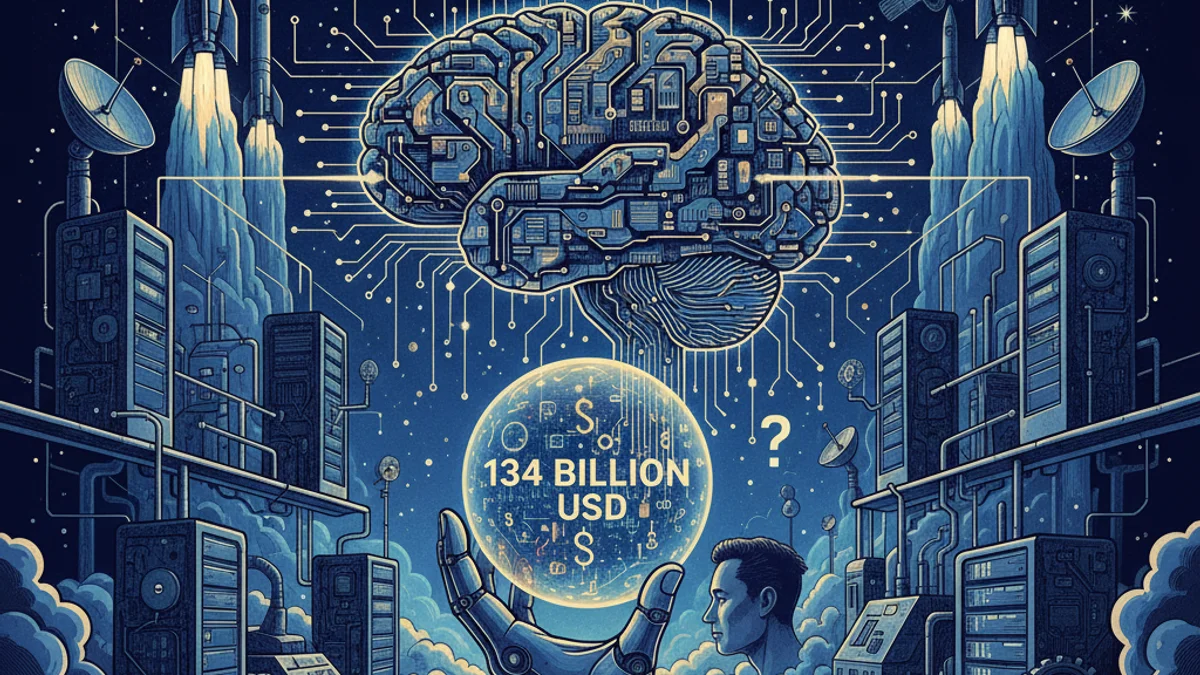
Elon Musk's $134 billion lawsuit against OpenAI and Microsoft could reshape the AI landscape. This case raises critical questions about profit distribution and regulatory frameworks in the tech sector.
Elon Musk, one of the most influential figures in the tech world, has taken legal action against OpenAI and Microsoft, filing a lawsuit valued at an extraordinary $134 billion. Musk alleges that both companies have generated excessive profits from artificial intelligence technologies, many of which he claims stem from his initial investments and contributions to OpenAI. This legal battle not only highlights the growing tensions within the AI industry but also raises critical questions about ethical AI development, profit distribution, and regulatory practices.
This article will explore the motivations behind Musk's lawsuit, its potential repercussions on the AI and tech sectors, and the broader implications for the future of artificial intelligence.
To understand this lawsuit, it’s important to revisit Elon Musk’s history with OpenAI. Founded in 2015 as a non-profit organization, OpenAI was created with the mission to ensure artificial intelligence benefits all of humanity. Musk was one of the co-founders and a major financial backer, reportedly contributing $100 million to the organization. At the time, Musk and the founding team emphasized the importance of democratizing AI and preventing its misuse by any single entity or corporation.
However, in 2018, Musk parted ways with OpenAI, citing potential conflicts of interest with Tesla’s own AI projects. Despite his departure, OpenAI transitioned into a for-profit model in 2019, raising significant capital from investors, including Microsoft. This shift marked a departure from the organization’s original mission, a move that Musk has publicly criticized on numerous occasions.
Microsoft’s involvement with OpenAI began in earnest in 2019, when it invested $1 billion in the organization. This partnership positioned Microsoft as a key player in the AI race, integrating OpenAI’s cutting-edge technologies, such as the GPT series, into its own products, including Azure cloud services and Microsoft Office. More recently, Microsoft announced a multi-year, multi-billion-dollar investment in OpenAI, further solidifying its position as a leader in AI innovation.
Musk, however, has expressed concerns that this partnership has led to a consolidation of power and wealth in the AI sector, counter to OpenAI’s original vision. According to Musk, OpenAI and Microsoft have reaped massive financial gains—profits he believes were made possible, in part, by his initial contributions to OpenAI.
At the heart of Musk’s $134 billion lawsuit are several key allegations:
Musk claims that OpenAI and Microsoft have profited disproportionately from AI technologies that were intended to serve the public good. He argues that these profits are the result of a betrayal of OpenAI’s founding principles and a direct consequence of his early financial and strategic contributions.
Musk has long been an outspoken advocate for ethical AI development. He alleges that OpenAI and Microsoft’s profit-driven approach prioritizes financial gains over societal benefits, potentially leading to the misuse of AI technologies.
By leveraging their partnership, OpenAI and Microsoft have established a dominant position in the AI market, leaving little room for smaller players and startups to compete. Musk argues that this monopolistic behavior stifles innovation and undermines the competitive landscape.
Musk’s lawsuit has the potential to trigger widespread changes across the tech and AI industries. Below, we examine some of the possible outcomes and their implications.
If Musk’s lawsuit succeeds, it could set a precedent for how profits from AI technologies are distributed among stakeholders. This may prompt governments and regulatory bodies to introduce stricter guidelines on AI development, focusing on transparency, accountability, and equitable profit-sharing. For example, debates around fair use of AI-generated content and intellectual property could gain new momentum, influencing future legislation.
The lawsuit has already sparked uncertainty within the tech sector, with potential repercussions for both established companies and emerging startups. Investors may become more cautious about funding AI ventures, especially if regulatory oversight intensifies. On the other hand, a ruling in Musk’s favor could level the playing field, creating new opportunities for smaller players to enter the market.
This legal battle also underscores growing public concerns about the ethical implications of AI. As issues like data privacy, algorithmic bias, and economic inequality take center stage, companies may face increased pressure to align their practices with societal values. The outcome of this lawsuit could serve as a litmus test for the industry’s commitment to ethical AI.
The current controversy surrounding Musk, OpenAI, and Microsoft is emblematic of broader debates that have plagued the AI community for years. Since the advent of AI research in the mid-20th century, questions about the technology’s potential misuse and societal impact have persisted.
In recent years, the rapid commercialization of AI has intensified these concerns. Companies like OpenAI and Microsoft have made groundbreaking advancements, but these innovations often come at the cost of ethical dilemmas. From facial recognition technology used in surveillance to deepfake videos spreading misinformation, the misuse of AI is a growing threat. Musk’s lawsuit highlights the need for a balanced approach that ensures innovation does not come at the expense of societal well-being.
Elon Musk’s $134 billion lawsuit against OpenAI and Microsoft is far more than a legal dispute—it’s a pivotal moment in the evolution of artificial intelligence and its role in society. By challenging the profit-driven model of AI development, Musk is forcing the industry to confront some of its most pressing ethical and economic questions.
The outcome of this case could have far-reaching implications, from reshaping the way AI technologies are developed and commercialized to influencing global regulatory frameworks. It could also redefine the relationships between tech giants, investors, and startups in an industry that is increasingly central to the global economy.
For investors, entrepreneurs, and policymakers, this lawsuit serves as a wake-up call to critically assess the future of AI. Will this case pave the way for a more equitable and transparent AI ecosystem, or will it deepen the divide between powerful corporations and the rest of the industry? Only time will tell, but one thing is certain: the stakes have never been higher.
For more insights into the evolving AI landscape, check out related coverage from TechCrunch, The Verge, and Wired.