Ética & Regulação
Switzerland Tests Solar Railways: Energy for 300,000 Homes
Dr. Adrian Vale
LLM, AI Agents & AI Infrastructure Specialist
4 min read
Listen to Article
AI automated narration
LLM, AI Agents & AI Infrastructure Specialist
Switzerland's solar railway pilot, led by startup Sun-Ways, demonstrates the potential to generate renewable energy by installing photovoltaic panels between railway tracks. The system, which could power 300,000 European homes if scaled, has drawn attention from countries like France and Italy as a model for dual-use infrastructure. Challenges include regulatory approvals, panel durability, and cost efficiency.
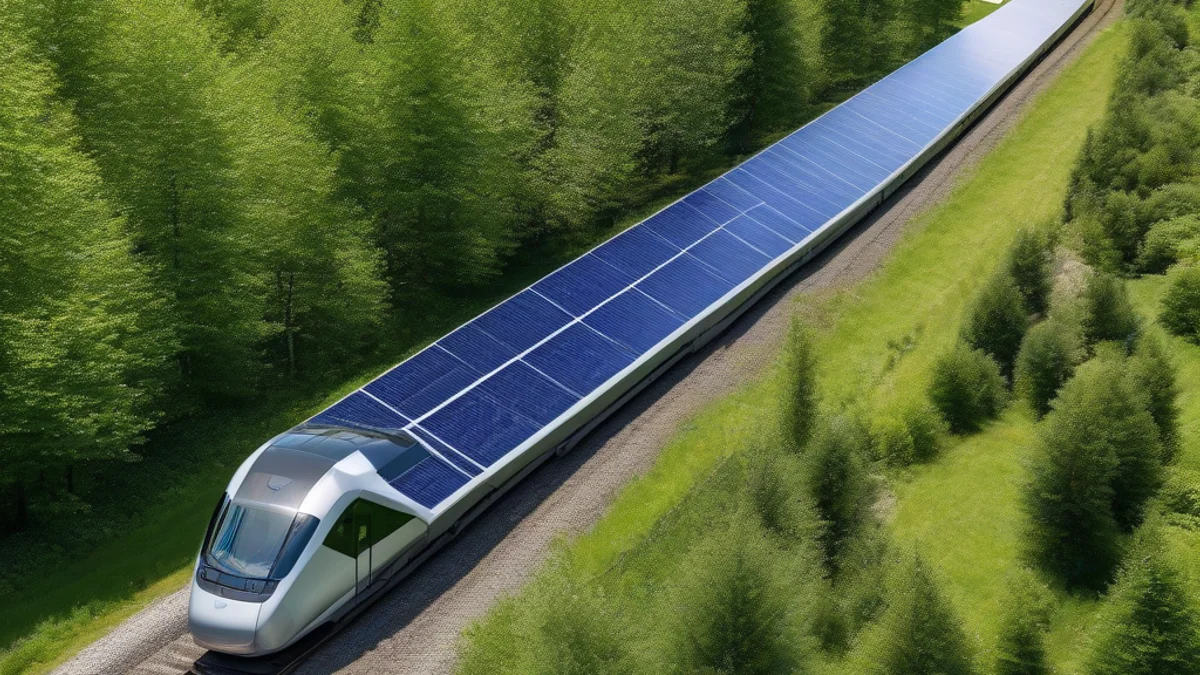
Switzerland has unveiled a promising renewable energy initiative: a solar railway pilot project developed by the Swiss startup Sun-Ways. This innovative concept installs removable photovoltaic (PV) panels between existing railway tracks, transforming transportation infrastructure into energy-generating assets. The project addresses land-use conflicts prevalent with traditional solar farms while aligning with the European Union’s goal of achieving carbon neutrality by 2050.
The pilot project, conducted in western Switzerland, has shown that, if scaled, the solar railway system could generate enough electricity to power 300,000 homes annually across Europe. Importantly, the panels have been designed to integrate seamlessly with railway operations, ensuring no interference with train movement. This dual-use of infrastructure is a significant step forward in addressing the challenges of land scarcity and renewable energy production.
Switzerland’s success has captured the attention of countries like Italy, France, and Japan, which are now exploring similar solar railway projects. The concept of "solar corridors"—rail networks that double as renewable energy sources—is gaining traction as a scalable solution to meet energy demands while reducing carbon footprints.
Despite its potential, the widespread adoption of solar railways faces key challenges:
The trial is set to conclude by 2029, with further deployment contingent on its outcomes. To facilitate large-scale adoption, improvements in solar panel durability and cost efficiency will be essential. Additionally, regulatory harmonization at the EU level and public-private partnerships could accelerate the rollout of solar railway systems.
Switzerland’s solar railway project represents a significant step in the transition to sustainable energy. If challenges are addressed, the dual-use model could become a cornerstone of Europe’s strategy to achieve its ambitious climate goals.
Solar railways use removable photovoltaic panels installed between train tracks. These panels generate electricity from sunlight while allowing trains to operate without disruption.
Key challenges include differing safety and energy regulations across countries, the need for durable panels to withstand vibrations and weather, and high upfront costs.
Countries like Italy, France, and Japan have shown interest in implementing similar solar railway systems, inspired by Switzerland's pilot project.
💡 Dica Pro: When designing dual-use infrastructure like solar railways, consider modular panel systems. These allow for easier maintenance and upgrades without disrupting primary functions, such as train operations.